




Site MapEverything Design Delight Studio makes, teaches and builds
Organic apparel under four third-party certifications. 75 free AI engineering masterclasses. Four free browser games. A Massachusetts thrift directory. The multi-agent systems that run all of it. Product and collection counts on this page are read from the live catalogue at page load, so they cannot go stale.
Quick answer
Design Delight Studio is a Boston print-on-demand studio founded in 2024. It sells made-to-order organic and recycled apparel — tees, sweatshirts, hoodies and totes — under 4 independent third-party standards: GOTS, GRS, OCS, PETA-Approved Vegan. Nothing is printed until it is ordered, so there is no overproduction and no unsold inventory. The studio also publishes 75 free AI engineering masterclasses and four free browser games, and builds the multi-agent software that runs the business. United States shipping is free with no minimum.
 Shop
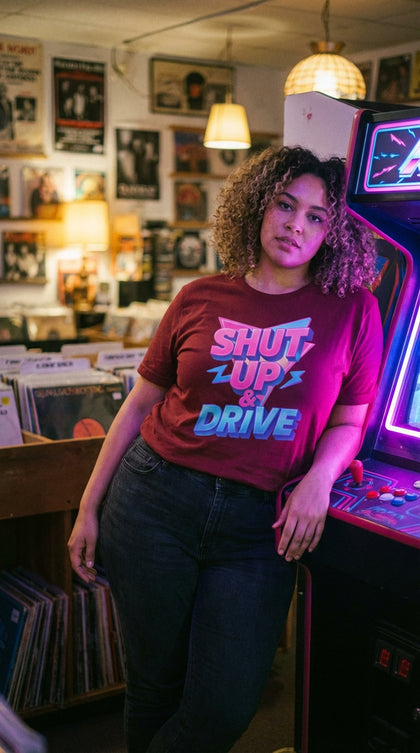
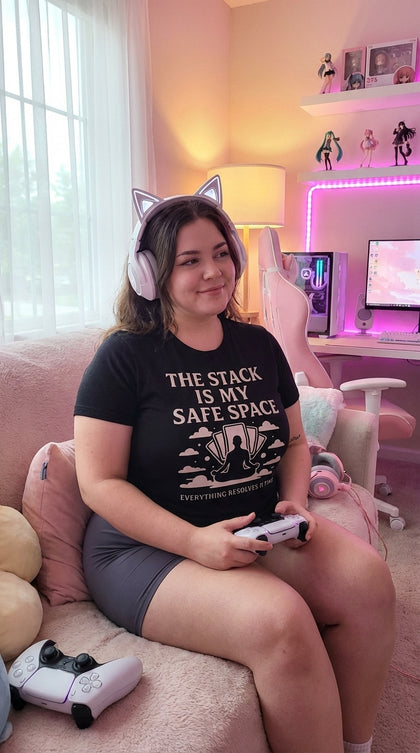
ShopDesign Delight Studio sells 401 made-to-order products across 13 collections: organic cotton t-shirts from $24.99, tote bags from $34.99, sweatshirts from $49.99 and hoodies from $54.99. Nothing is printed until it is ordered. Collections below render from the live catalogue, so a renamed or retired collection cannot leave a dead link here.
The catalogue is built on a small number of blanks chosen for their certification chain rather than their margin. Stanley/Stella supplies the tees and sweatshirts; Econscious supplies the EC8000 tote; Printful produces the all-over-print items. Each product page states which blank it uses and which standards apply to that specific item, because the standards are not uniform across the range — recycled-content certification applies where there is recycled content, and organic-fibre certification applies where there is organic fibre.



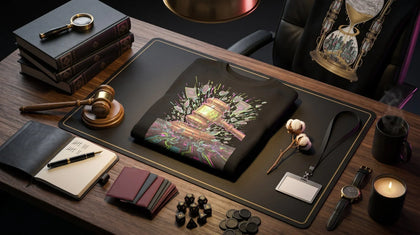
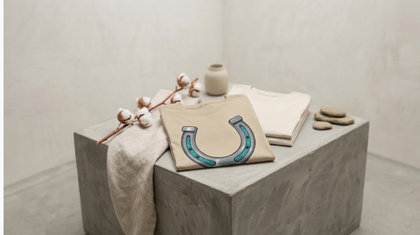

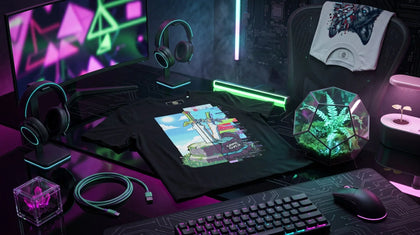






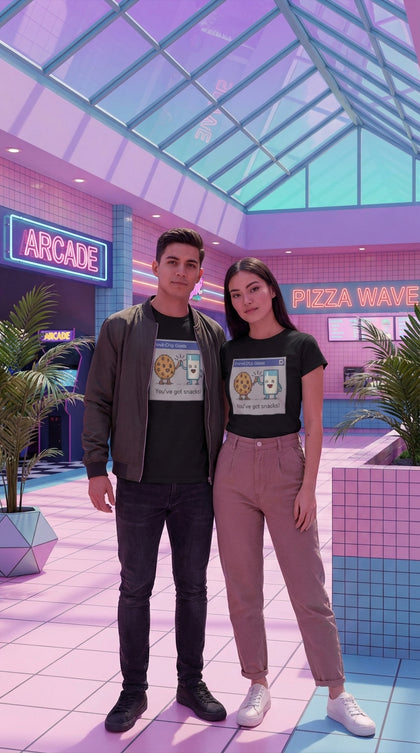
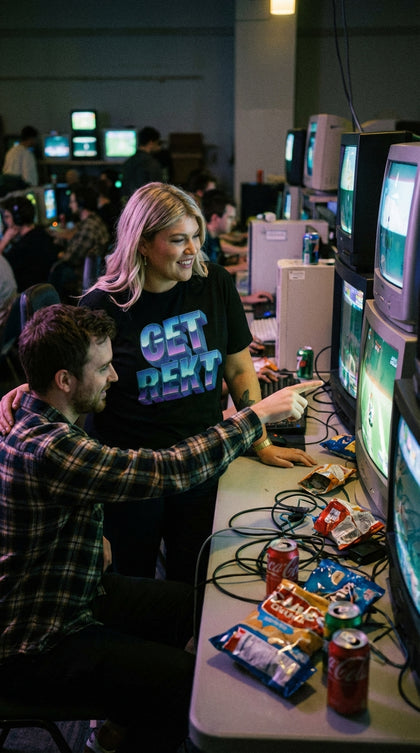
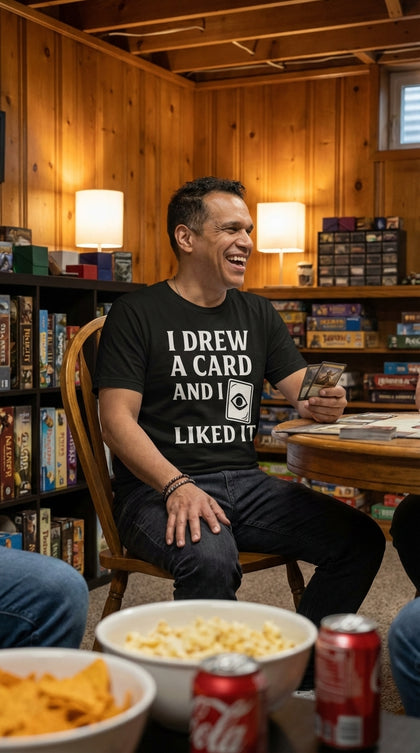
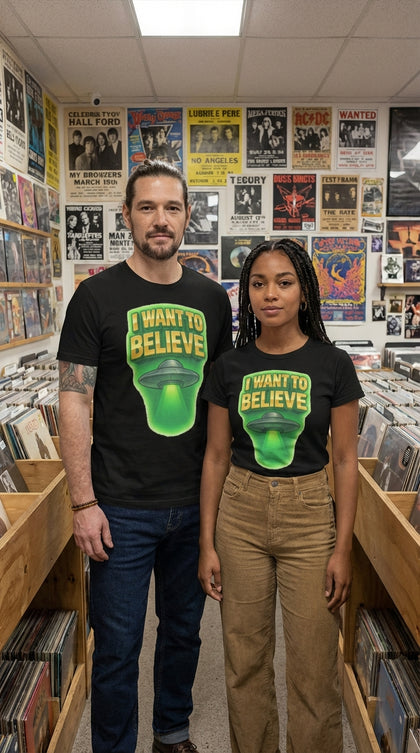
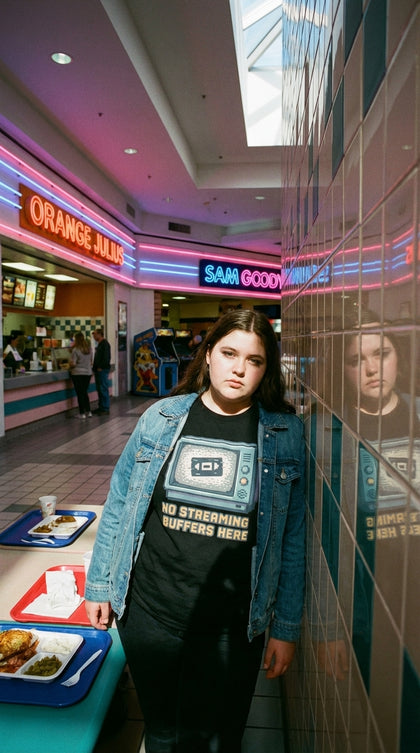
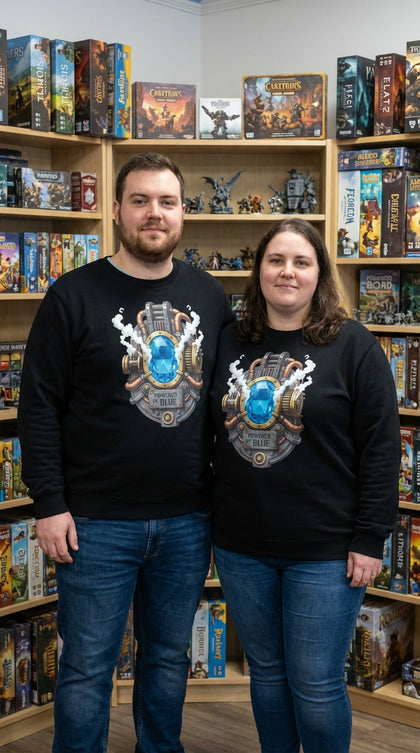
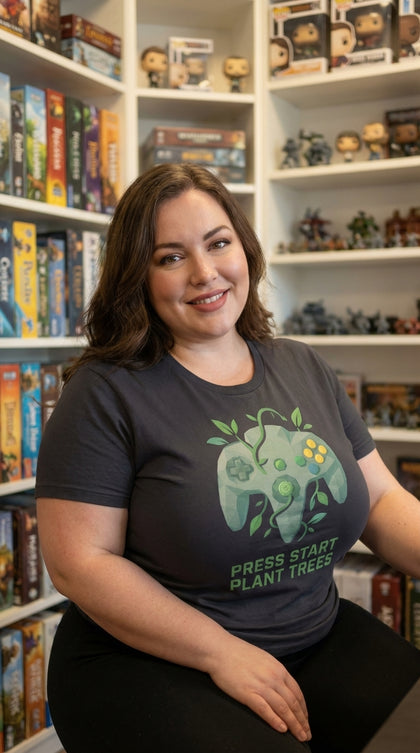
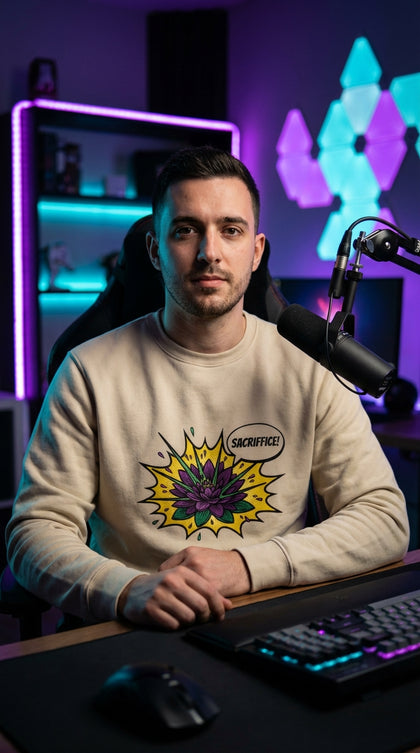
Autumn Picks
See everything → Autumn Picks
A live slice of the catalogue. These cards render from current product records, so prices and availability are whatever the store says right now rather than what was true when this page was written. Certification varies by blank — each product page states the standards that apply to that item.

Certifications & Proof
See the certificates → Certifications & Proof
4 independent third-party standards apply to Design Delight Studio products at brand level: GOTS, GRS, OCS, PETA-Approved Vegan. Each certifies a different property — organic fibre content, recycled content, chain of custody, animal-free materials — and none substitutes for another. Fair Wear Foundation is a supplier membership, counted separately. Design Delight Studio has never held Fair Trade certification.
What each standard actually audits
- GOTS — Global Organic Textile Standard
- Organic fibre content plus processing, environmental and social criteria across the whole supply chain.
- GRS — Global Recycled Standard
- Recycled content, chain of custody, and processing and social requirements.
- OCS — Organic Content Standard
- Organic fibre content and chain of custody from field to finished garment.
- PETA-Approved Vegan — Certified animal-free
- No animal-derived materials and no animal testing anywhere in the product.
Supplier membership, stated separately on purpose
Our Stanley/Stella blanks are sewn by a Fair Wear Foundation member — a supplier membership, not a Design Delight Studio certification. The membership is held by Stanley/Stella and covers independent factory labour auditing at that supplier. It applies to the four Stanley/Stella blanks in the range and does not cover the Econscious EC8000 tote or the all-over-print sweatshirt and jersey, which come from different suppliers. Any sentence that puts Fair Wear alongside the 4 standards as a fifth certification is wrong, and where you find one on this store it is a defect we have not yet caught.
OEKO-TEX: one blank, by certificate number
Design Delight Studio does not hold OEKO-TEX at brand or catalogue level and does not claim it. One specific blank carries OEKO-TEX STANDARD 100 certification, cited only on its own product pages, by number:
- STTU169 (Stanley/Stella tee) — certificate 2012163, issued by Centexbel.
- EC8000 (Econscious tote) — carries no OEKO-TEX certificate.
Everything else in the range is outside that scope. The OEKO-TEX guide on this store is an educational reference about the standard, not a claim about our catalogue.
Pesticides: the accurate statement
Organic certification prohibits synthetic pesticides. Organic agriculture does permit certain naturally derived substances, so the honest claim is that the cotton is grown without synthetic pesticides — not without pesticides altogether. The difference matters because GOTS certifies the former and not the latter, and attributing more to a certification than it covers is the most common way an apparel claim becomes false.
What Design Delight Studio does not hold, and does not claim
Publishing the limits is part of the proof. None of the following is true of this studio, and any copy suggesting otherwise is an error rather than a position:
- Fair Trade certification. Never held, never claimed, never targeted.
- Brand-level OEKO-TEX. One blank by certificate number, nothing wider.
- Carbon neutral, net zero or offset shipping. No offset programme and no lifecycle assessment exists.
- Quantified environmental savings. No litres-saved or percentage-less-water figure is backed by an assessment of our supply chain, so none is published.
- Non-toxic or chemical-free inks. No ink certificate is published, so no ink claim is made.
- Customer reviews or ratings. The store publishes no review corpus, so any star rating or testimonial attributed to it would be fabricated.
- Guarantees or warranties. Returns are governed by the published refund policy and nothing else.
Standards, sourcing and care
DDS Vibe Academy
Open the Academy → DDS Vibe Academy
The DDS Vibe Academy is 75 free written masterclasses on AI tooling, agent architecture, retrieval systems, storefront engineering and game development. No account, no email address and no payment is required to read any of them. Each is a single long-form page covering one system end to end, written from builds actually run in this studio.
The Academy exists because the useful part of AI-assisted engineering is rarely the model — it is the discipline around it. Most of these classes are therefore about instruments rather than prompts: how to test what a model wrote, how to read code you did not type, how to gate an autonomous system so it fails closed, and how to tell a real measurement from an artefact of your own tooling. Several document failures in detail, including a build where the author caught four mistakes and the instruments caught twelve.
Every class below is a live page on this store. They are grouped by tool first, because that is how people search, and then by discipline.
Foundations 3
Claude 14
Gemini 7
Antigravity 5
IDEs & environments 8
Local & Ollama 2
Agents, MCP & RAG 1
Shopify build 6
Engineering discipline 9
Media & routing 3
Game builds 1
Case studies 10
Roundups & frontier 6
Also published: the Vibe Code Academy journal, a running series on emerging AI coding patterns that sits alongside the masterclasses.
 Games
GamesDesign Delight Studio publishes four free browser games: Dragonfly Crush 2, VOLTHAVEN 64, ASHAVETH and the original Dragonfly Crush. They run in a browser with no install and no account, and they are collected at games.ddsboston.com under a free-forever charter. Each one also has a written build masterclass in the Academy.
The games are not merchandising. They are the studio's own engineering, built with the same agentic workflow the Academy documents, and each one produced a class about what went wrong — a hundred levels in fifty-five hours with the live site going down on hour forty-six, and a retro 3D world that required nineteen specific techniques before it stopped looking like a PlayStation game.
Dragonfly Crush 2
One hundred hand-built levels. Runs in the browser, costs nothing.
VOLTHAVEN 64
A retro 3D world built with the nineteen techniques that make N64 read as N64.
ASHAVETH
A dark fantasy browser game documented across forty-six design documents.
Inside Dragonfly Crush 2 6 levels
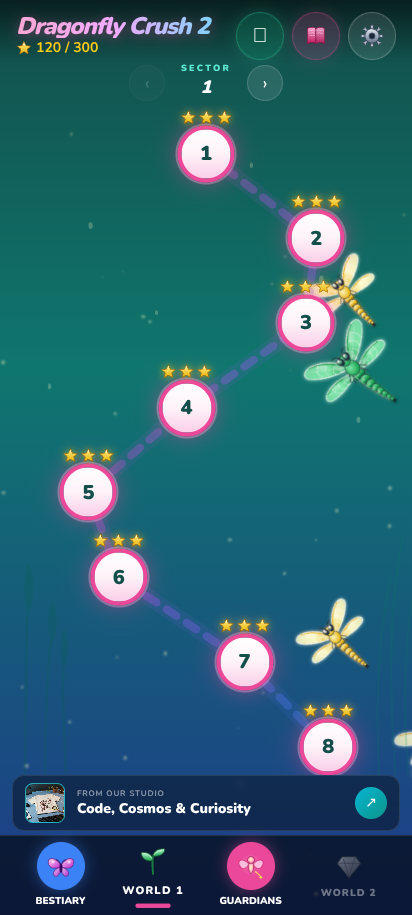
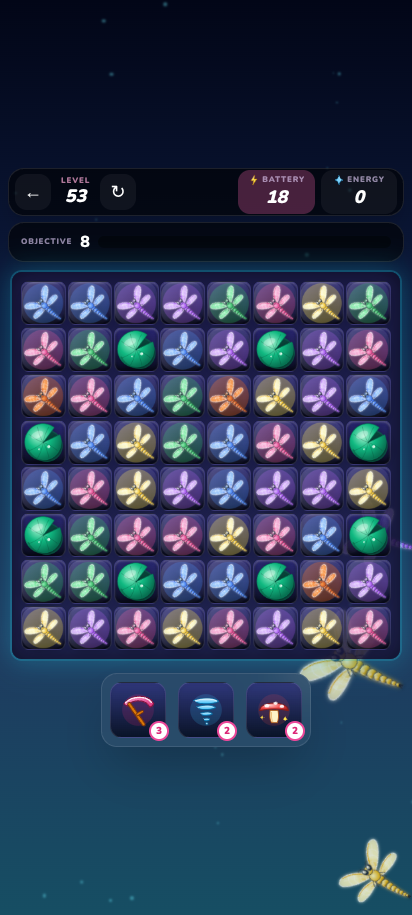
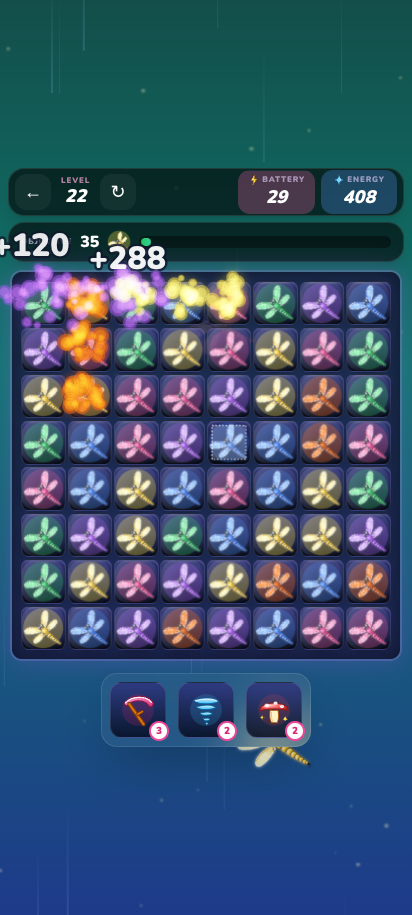
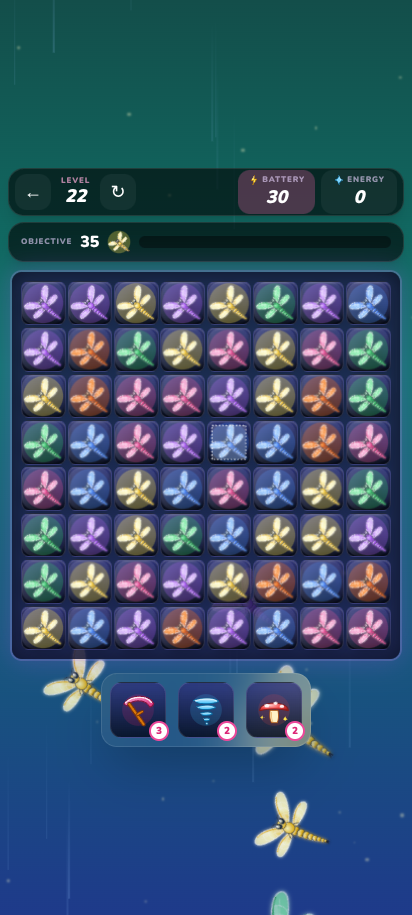
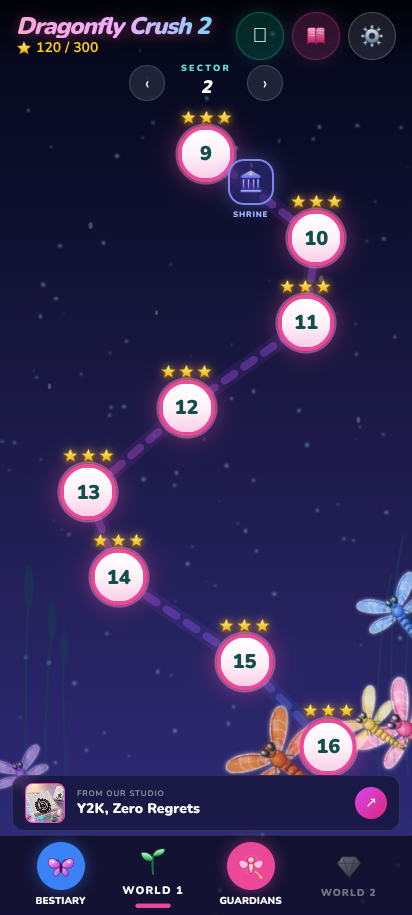
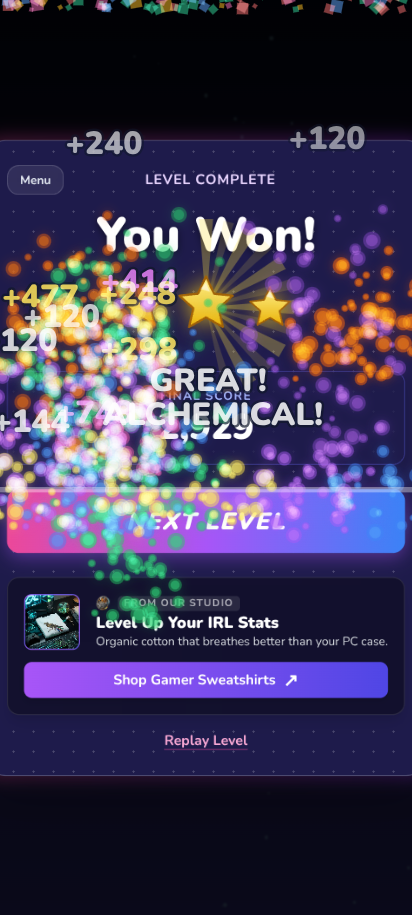
One hundred levels built by hand in fifty-five hours, with the live site going down on hour forty-six. These are real screens from the shipped game — the garden and night maps, the cavern and cascade runs, the rain level where weather is a mechanic, and a win screen.
Built With AI, End to End
See how → Built With AI, End to End
Design Delight Studio is an AI-built and AI-run studio. The storefront, this page, the agent stack that publishes the content, the four browser games and the 75 masterclasses that document all of it were produced with AI in the loop at every stage. The evidence is not a claim on this page — it is 75 written build logs, four playable games and the case studies below.
Most brands that say "AI-powered" mean a chatbot bolted to a checkout. This one means the software was written by directing models, the content pipeline is a multi-agent system, inference runs locally where it can, and the instruments that check the output were built the same way. It is also why this page carries a section listing what the studio does not claim: an AI-run operation that does not audit itself produces confident, wrong copy at volume.

The storefront
This store, its theme and this page were built with AI in the loop and are documented class by class in the Academy.

The agent stack
Sovereign Orchestrator Pro, AGI-CORE-Pro and the Synthetic Director run content, scheduling and publishing.
The games
Four browser games built with the same agentic workflow, each with a written post-mortem including what broke.
The teaching
Seventy-five masterclasses written from real builds, not tutorials rewritten from documentation.

Local inference
An Ollama stack handles work that does not need a frontier model, on hardware the studio owns.

The instruments
Scanners, positive controls and pre-publish gates that check the output before a customer sees it.
AI Systems & Case Studies
Portfolio →Design Delight Studio builds the software that runs it. Sovereign Orchestrator Pro coordinates content generation and publishing, AGI-CORE-Pro drives the Synthetic Director, and a local Ollama stack handles inference that does not need a frontier model. These pages are engineering write-ups with architecture and failure modes, not product listings, and nothing on them is for sale.
Almost no apparel brand publishes its own agent architecture. This one does, partly because the systems are the more interesting half of the business and partly because publishing the design is the only honest way to claim it exists. The case studies include the parts that did not work: silent scrapers, schema mismatches between an adapter and an API-shaped filter, and detection rules that reported zero because they were looking for one markup form of a claim that existed in four.
The multi-agent system that runs content generation, scheduling and publishing for this store. → Sovereign Orchestrator Pro V6.0
The build itself, documented as a masterclass rather than a diagram. → AGI-CORE-Pro — The Synthetic Director
An autonomous creative agency: brief in, finished assets out, with humans on the gates. → AGI Nexus V9.0
The technical whiteboard for a one-million-token autonomous digital office. → Atelier OS
A multi-agent system built in fifty-two hours, taken apart in public. → NICHE-FORGE-CORE V3.0
Niche discovery and content forging, explained from the inside. → VibeTube AI
Video pipeline automation built on the multi-model routing pattern. → Desktop Apps Portfolio
The desktop software built in this studio and what each application does. → Virtual Try-On Studio
AI-powered fitting that shows a garment on you before you order it.
Client work. The studio also delivers freelance builds. JTD Masonry is a bilingual English and Spanish React site produced as a client deliverable and hosted on Cloud Run. It is listed here as a credential rather than a link, because the demo deployment is not currently serving the site.
The Bay State Treasure Gazette
treasure-gazette.ddsboston.com →The Bay State Treasure Gazette is a Design Delight Studio directory of Massachusetts thrift stores, vintage boutiques, consignment shops and antique dealers, organised by region with addresses. It is a separate property at treasure-gazette.ddsboston.com and it is free to use.
It exists for the same reason the studio sells made-to-order clothing: the cheapest garment in environmental terms is one that already exists. A directory of the places selling second-hand clothing in Massachusetts is a straightforwardly useful thing to publish, and it sits comfortably beside a store that does not want to produce anything nobody asked for.
Journal
All articles → Journal
Design Delight Studio publishes on three surfaces: the main journal on this store, the Vibe Code Academy journal on emerging AI coding patterns, and a separate WordPress blog at designdelightstudio.com. The posts below are the most recent from each, pulled live at page load rather than listed by hand.
Latest from the journal
Latest from the Vibe Code Academy journal
Elsewhere
Company
About us → Company
Design Delight Studio is an independent print-on-demand apparel studio and AI build shop, founded in 2024 and based at 38 Beacon St, Boston, Massachusetts. It is run by Robert McCullock. These pages cover who runs it, how it is built, and how to reach the studio directly.
Help & Orders
Contact support → Help & Orders
Order help, account access and the store policies in one group. United States shipping is free with no minimum. Delivery estimates are calculated at checkout before payment. Returns and refunds are governed by the refund policy linked below, which is the only authoritative source for the current terms.
Frequently Asked Questions
 Frequently Asked Questions
Eighteen questions covering what the studio sells, which standards apply and which do not, what things cost, what the Academy and the games are, and how orders, returns and support work. These answers are the same text published in this page's FAQPage structured data — both render from one source, so they cannot disagree.
What does Design Delight Studio sell?
Which certifications do the products carry?
Is Design Delight Studio Fair Trade certified?
Is Design Delight Studio OEKO-TEX certified?
What is the difference between GOTS, GRS and OCS?
What does the Fair Wear Foundation membership actually cover?
Are the garments grown without pesticides?
How much do items cost?
Do you ship free?
What is made-to-order and why does it matter?
What is the DDS Vibe Academy?
Do I need to pay for the Academy or create an account?
What games does Design Delight Studio make?
What AI systems does the studio actually run?
What is the Bay State Treasure Gazette?
How do I return or exchange an order?
Who runs Design Delight Studio?
How do I contact a human?
Key takeaways
- 401 products across 13 collections, every one made to order after purchase — no overproduction, no unsold inventory, no end-of-season disposal.
- 4 independent third-party standards apply at brand level: GOTS, GRS, OCS, PETA-Approved Vegan. Certificates are listed on the Certifications page.
- Fair Wear Foundation is a supplier membership, not a certification, held by Stanley/Stella, covering four blanks and not the tote or the all-over-print items.
- Design Delight Studio has never held Fair Trade certification and cites OEKO-TEX on exactly one blank by certificate number, not at brand level.
- The cotton is grown without synthetic pesticides. Organic certification prohibits synthetic pesticides; it does not prohibit all pesticides, and the studio does not claim it does.
- 75 masterclasses are free to read with no account and no payment, alongside a second journal on emerging AI coding patterns.
- Four browser games, free forever, with no install and no account, each with a written build class documenting what broke.
- United States shipping is free with no minimum order, and delivery estimates are shown at checkout before payment.
- Founded in 2024 in Boston, at 38 Beacon St, run by founder Robert McCullock.
- Counts on this page are read from the live catalogue at page load. An earlier edition hardcoded them and drifted by 65 products before anyone noticed.
Contact
 Contact
Boston, MA 02108